The Art Institute of Chicago is returning the Cubist painting “Woman with a Fan” by French artist Jean Metzinger to the Lewenstein family, the institution announced Tuesday.
The oil painting from 1913 was lost during a forced Nazi-era sale in the Netherlands. However, there were significant gaps in the painting’s historical record, said Jacques Schuhmacher, the museum’s executive director of provenance.
The work resurfaced on the Dutch art market in the 1950s, moved through galleries in Paris and New York City, and was later acquired by the Art Institute of Chicago in 1959, when Mr. and Mrs. Sigmund Kunstadter donated the work to the Chicago museum.
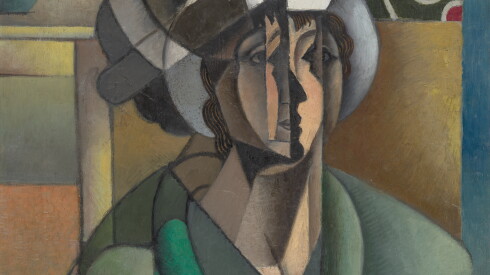
But through modern infrared imaging technology, Schuhmacher said, researchers discovered a name written in faint pencil on the back of the piece: Paul Citroen. Citroen was a Dutch art dealer in Berlin and the Netherlands who sold the work to art collector Emmanuel Lewenstein.
“This allowed us to make a connection between our painting and the Lewenstein family for the first time,” Schuhmacher said. “With the evidence written on the painting itself, we carried out additional research in collaboration with the Mondex Corporation.”
Industrywide, artistic provenance has become a key focus of museum leaders and has been the subject of complex court cases and legal disputes. In 2024, the Art Institute announced the appointment of Schuhmacher as its first executive director of provenance research and operates one of the largest such departments in the country.
Last week, a New York City appellate court ruled that a different World War II-era painting, a 1916 watercolor and pencil drawing by Egon Schiele titled “Russian War Prisoner,” could remain at the Art Institute of Chicago while ownership disputes are handled in civil court.
Investigators for the Manhattan district attorney’s office cited a penal law that governs the disposal of stolen property. And in 2025, a New York Supreme Court judge determined that the Schiele had been stolen by Nazis from Fritz Grünbaum before the start of World War II. Two years prior, authorities officially approved the seizure of the artwork from the Art Institute in 2023, but let it stay at the museum.
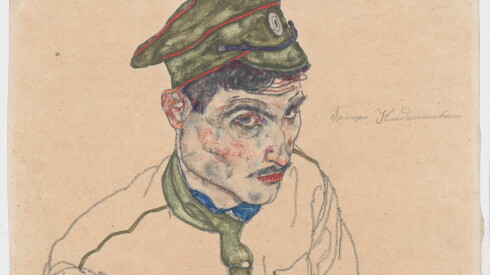
The Art Institute maintains that it purchased “Russian War Prisoner” legally in 1966, and in a statement said that the Metzinger and Schiele works are two very different cases.
“We are confident in our extensive research, which indicates very different facts for each of the two works,” the statement reads. “Evidence indicates the Metzinger painting was seized from the family and forcibly sold, while evidence related to the Schiele drawing indicates it was never seized, stayed within the family, and was ultimately sold by the family more than ten years after the war.”
In the case of “Woman with a Fan,” Lewenstein’s heirs are represented by the Toronto-based firm, which specializes in the recovery of art and cultural artifacts that were looted or stolen during the Holocaust.
“In provenance research you often triangulate different kinds of sources,”
Schuhmacher said. “Taken together, [we] confirmed that our painting was sold as a result of Nazi persecution in 1940 in the Netherlands.”
But with the new discovery, the case required a close look at archives from the Netherlands. “We found documents from Paul Citroen, which showed that he sold this painting to Emanuel Lewenstein in 1928,” Schuhmacher said.
Years later, in 1933, Adolf Hitler became the chancellor of Germany, which marked the effective seizure of power by the Nazi Party. By 1940, World War II was in full effect and the Nazis had occupied the Netherlands, where the Lewenstein family lived.
“The Lewensteins were Jewish. They were persecuted because they were Jewish,” Schuhmacher said.
With the uncovered documents, which included an auction catalog from 1940 and a Dutch newspaper article from the same year, researchers were able to verify the exact dimensions of the Metzinger painting and match it with the one in the Art Institute’s collection. They determined then that the painting should go back to the Lewenstein family.
“The decision was made to restitute [the painting] to the Lewenstein heirs, and I think what’s really important here is that in restituting a piece, it’s not just about transferring ownership back to a family,” Schumacher said. “It’s also about restoring the agency [to the family] to do with this painting what they think is appropriate.”
Megan Michienzi, spokesperson for the Art Institute of Chicago, confirmed that the Metzinger painting is no longer on view at the museum. The museum is working with art handlers to arrange for the work to be sent back to the living heirs of the late art collector, Michienzi said.
Michienzi said the Art Institute has “prioritized provenance research, and we are happy to return items when we learn new information that suggests that they should go back.”