Since 1978 with the passage of Proposition 13, California voters have repeatedly tried to protect their homes and businesses from excessive taxation by imposing limits on property taxes and requiring two-thirds voter approval for other local taxes. Despite the clear intent of the voters, California courts have sided with the government and its special interest benefactors by creating loopholes that significantly weakened these protections.
The worst of these loopholes, fashioned out of whole cloth, was the California Supreme Court’s 2017 decision in California Cannabis Coalition v. City of Upland. The decision created an ambiguity as to whether the two-thirds vote threshold for local special taxes would apply to local initiative measures put on the ballot by special interests. Since Upland, all kinds of unconstitutional taxes have been imposed on Californians costing billions of dollars that they would not have had to pay if the courts followed the plain language of Prop. 13, enforcing a two-thirds vote to pass special taxes.
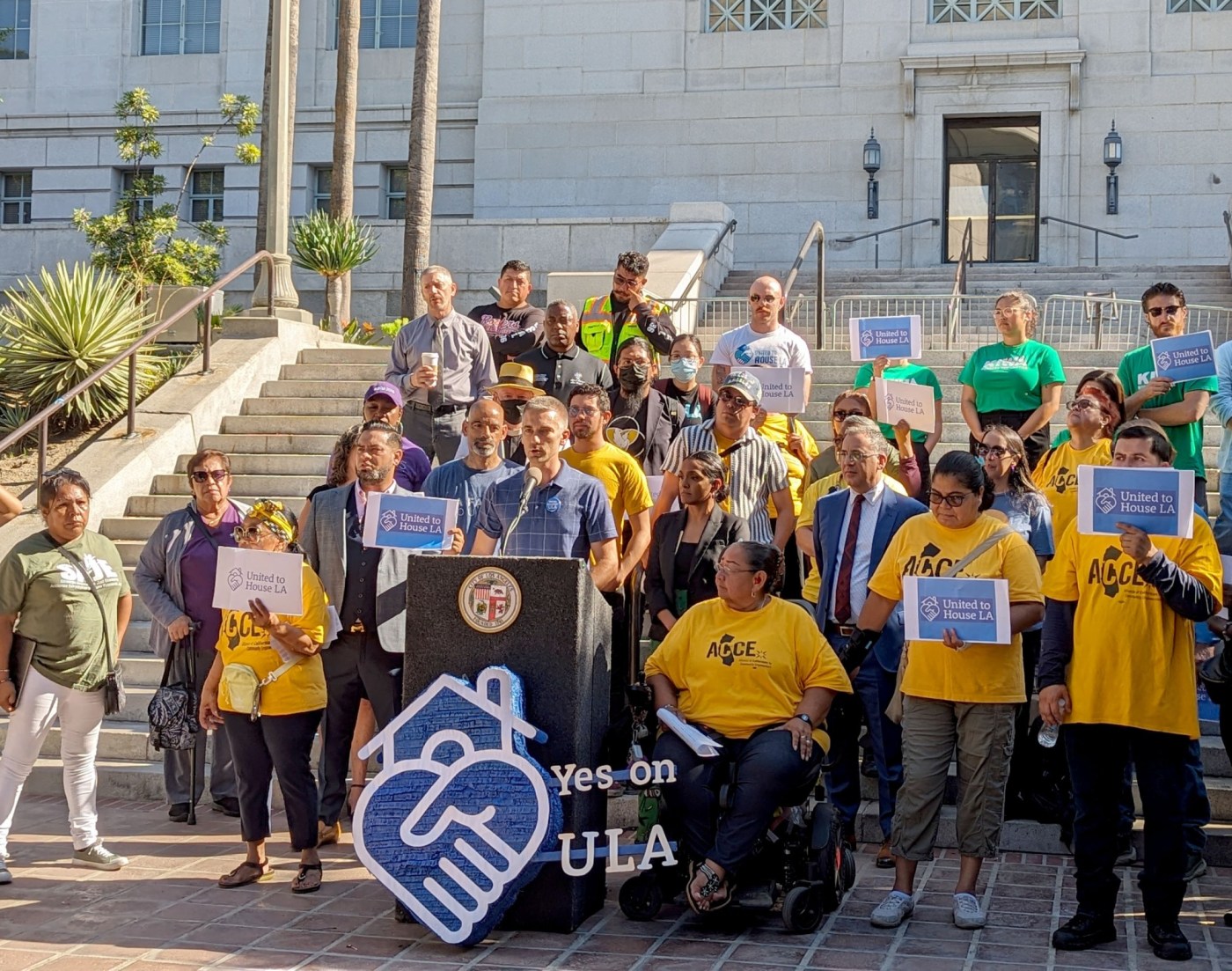
Not to be left out of the taxing-raising orgy, the special interests in the city of Los Angeles exploited the Upland decision to pass the infamous Measure ULA tax, a massive increase in the city’s real estate transfer tax on the sale of properties valued over $5 million. Cleverly mischaracterized as a “mansion tax,” the tax is imposed on the sale of all properties over the $5 million threshold including apartments, commercial and industrial properties. (Proceeds from the tax are ostensibly dedicated to homelessness programs which, coincidentally, happen to be the very programs provided by groups that put Measure ULA on the ballot in the first place).
The Howard Jarvis Taxpayers Association challenged the ULA tax as violating the plain language of Prop. 13 as well as the city’s own charter, which limited the scope of the initiative power to those matters that the city itself could adopt. Because the city itself couldn’t impose a special transfer tax without a two-thirds vote, HJTA logically argued that the ULA simple-majority, special transfer tax was beyond the power of the local electorate. Nonetheless, that argument was rejected as well.
Even more troubling, in upholding the ULA tax, the Court of Appeal employed some very broad language which appears to authorize an even more expansive exploitation of the Upland loophole.
Although Prop. 13 prohibited new real estate transfer taxes when voters overwhelmingly passed it in 1978, court decisions in the 1990s carved a loophole for charter cities, those with their own local constitution, to enact transfer taxes if the funds were for general purposes. Special-purpose transfer taxes were still not allowed, and general law cities, which did not have their own local charters, were not allowed to enact transfer taxes at all.
But the appellate court ruling upholding the ULA tax may have opened the door for all cities and counties to impose any kind of transfer taxes as long as the tax is proposed by a “citizens’ initiative.” Moreover, it is more than likely that the ruling will incentivize tax raisers to impose parcel taxes which are not limited to Prop. 13’s one percent rate cap. Parcel taxes have exploded throughout California, even when subject to the two-thirds vote requirement. With that threshold now rendered irrelevant by Upland, property owners should brace themselves for a flood of new property levies. For business property owners, parcel taxes can be structured in a way that hits them even harder. Imposing differing rates of taxes based on the use of the property would create a de facto split roll tax.
But all is not lost. The Howard Jarvis Taxpayers Association is currently collecting signatures for a new initiative, the Local Taxpayer Protection Act to Save Proposition 13. It is a constitutional amendment that repeals and bans all real estate transfer taxes higher than 0.11%, as well as re-establishing the requirement for a two-thirds vote to raise all local special taxes. Registered voters in California can sign the petition by going to SaveProp13.com and easily printing it on one sheet of letter-size paper, or by requesting to have the petition mailed to them.
Only by passing the Local Taxpayer Protection Act to Save Proposition 13 can Californians stop the coming onslaught of higher local taxes.
Jon Coupal is president of the Howard Jarvis Taxpayers Associaiton.