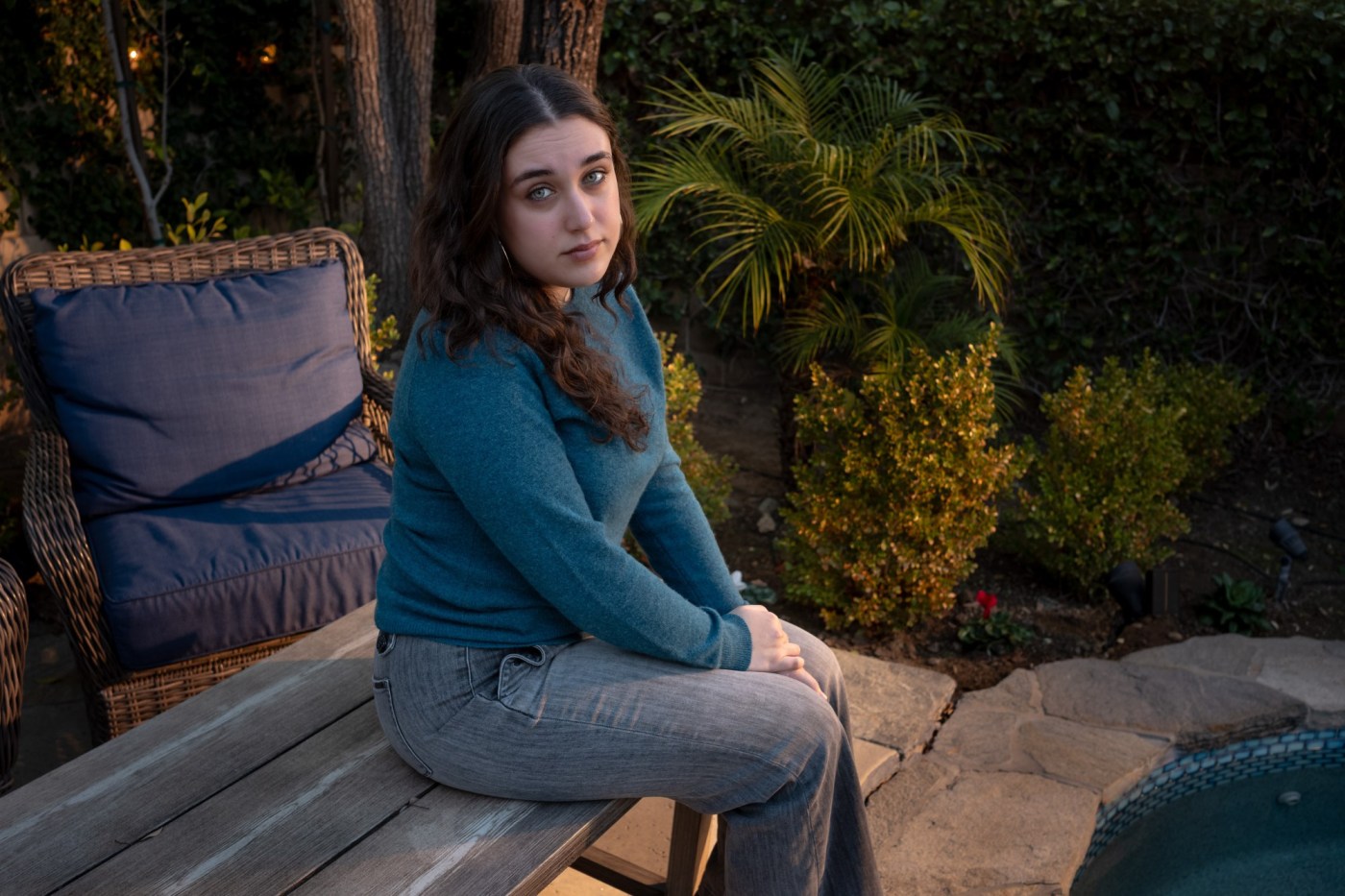
Mia Tretta returned home to sunny Saugus, California, on Wednesday, Dec. 17, after finishing her junior fall semester at Brown University.
It was a moment full of the energy of reuniting loved ones, the promise of some home cooking. A chance in California for some warmer weather. Like many college kids coming home for the holidays, it often feels ceremonious.
But this year for the young international and public affairs major, it was a homecoming like no other, after what she and her peers had just been through.
A gunman had shot two of her fellow students dead and injured nine others just days before, on Dec. 13, sparking a manhunt that would last for days.
Another mass shooting in America. Another American campus as ground zero for a shooter’s rampage. Another reminder of more young people growing up having experienced such violence.
A campus deep into finals season was jolted into a terrible mix of shock, mourning, uncertainty, fear – and for Tretta, flashbacks, coping, a lingering need to know that somehow as a nation we’ve not become desensitized to it all.
Tretta had seen this before.
“Gun violence doesn’t care whether you’ve already experienced a shooting before,” she said.
Flashback to 2019
Returning to Saugus always feels a bit “weird and eerie,” said Tretta, 21, as she spoke to the Southern California News Group from the backyard sunshine of her family’s Saugus home.
Nearly six years ago, Nov. 14, 2019, when Tretta was a high school freshman, a fellow Saugus High School student shot five students and later shot himself.
He killed two students, Gracie Muhelberger and Dominic Blackwell, Tretta’s best friend. Tretta was among the students shot, suffering a bullet to the abdomen.
She was only 15.
It would have profound impacts on the teen and her family.
Ever since Tretta was shot in the abdomen, she has never entered a library alone. She limits the time she spends in academic buildings.
“It’s not normal for us to have conversations with doctors, if she’ll be able to have children because of where she was shot,” said Tretta’s mother, Tiffany.
Tretta has had yearly surgeries on her body, where she was shot. Three years after the shooting, she had to repair a hole in her eardrum after it suffered acoustic glass damage.
Mentally, it’s been a challenge for Tretta to navigate the path to healing.
‘A giant setback’
After the trauma of Saugus, Brown became a bright light for the aspiring college student, a haven.
When Tretta was applying for colleges, she chose Brown University, a Rhode Island-based Ivy League school, because it was far away from Saugus, in a state with a reputation for safety from such violence.
“One of the reasons I chose Brown was because of the great gun laws …I felt like lawmakers really care,” Tretta said. “Rhode Island has the lowest gun death in all of America.”


When Tretta went off to Brown, her mother felt like she was on a path to healing, despite the possibility of her daughter experiencing a second mass shooting was always in the back of her mind.
Mia didn’t need to bring her service animal to college, which she required when she was in high school. And that was reassuring.
“There was just so much progress with her healing that was being made, and we are just so afraid that now, there’s just this giant setback.”
The bullets again
Dec. 13, the day of the Brown University shooting, Tiffany Tretta was getting ready to go to a holiday party with her husband at Holy Cross Medical Center in Mission Hills, which treated Mia after she was shot in Saugus.
Then, she saw she had a missed call from Mia, and immediately called her back. Like her daughter, Tiffany didn’t believe the threat at first. But it was only a matter of time before she found out it was real.
“I can’t say that ever since 2019, I’m not afraid for my children constantly,” said Tiffany, who also has a 12-year-old son. “I hear a siren, and I’m afraid. If I don’t hear back from one of my kids in five minutes, I’m afraid.”
It was all too real.
Reports of an active shooter began to circulate around campus. Mia Tretta was in her dorm room when she received a text delivering the alert, but she didn’t believe it at first.
“There’s lots of things that go on, like when fire alarms go off and there’s not always a fire,” she explained.
But it wasn’t until she received what felt like hundreds of texts saying “active shooter near Barus & Holley,” the engineering building at Brown, when she realized it was a real threat.
Mia Tretta herself was supposed to meet up with a friend in that building to study for finals, but decided to stay in her dorm at the last minute.
A 49-year-old gunman had shot and killed two students, Ella Cook and Mukhammad Aziz Umurzokov, and left nine in critical condition late that afternoon.

Police embarked on a manhunt for five days before finding the suspected gunman, Claudio Manuel Neves Valente, dead in a New Hampshire storage unit. Authorities said he is the same man who shot and killed M.I.T. professor Nuno F.G. Loureiro on Dec. 15 inside his home in Brookline, Massachusetts.
Before the gunman was found, there were many “false reports” circulating about where and who the shooter was. At one point, Mia Tretta said, “people were saying the shooter was on the block of mine. Then, the shooter was on the block behind us. Then, there were reports of shots happening in my area.”
Those reports “traveled around with people being so uncertain and so scared,” she said.
After the shooting, Brown University canceled all remaining finals. Then, Mia flew home the night of Dec. 17.
‘All of them are preventable’
Both Mia and her mother worry about how much the shooting at Brown will “set her back.”
Amid the concern, they are speaking up, mindful of a whole new generation of young people that are seeing this happen.
“But unfortunately, it doesn’t matter how great the gun laws are, and it doesn’t matter how much [Rhode Island] is doing to prevent gun violence, if there’s not an administration who cares about ending gun violence, or federal laws to protect us,” Tretta said.
There have been at least 394 mass shootings in the U.S. this year, according to the Gun Violence Archive. And there have reportedly been at least 75 school shootings as of Dec. 13. By earlier this month, according to The Associated Press, a shooting at a children’s birthday party in Stockton, California, that left four dead was the 17th mass killing this year. It marked the lowest number recorded since 2006, according to a database maintained by The Associated Press and USA Today in partnership with Northeastern University.
But experts have warned that the decrease doesn’t necessarily mean the future is safer.
And then there’s Mia’s 12-year-old brother, who had watched and listened to his parents cry every day because of what happened at his sister’s college.
“How do you tell a kid, you should do well in school so you can go to college. Come on,” said Tiffany Tretta. “It’s very hard, but it’s so preventable. And that’s the tragedy in all of it. All of them are preventable,” she said about gun violence.
So, they began fighting back. Since the Saugus shooting, both Mia and her mother have become advocates for gun safety in America, organizing with groups like Students Demand Action and Moms Demand Action, calling for reforms such as universal background checks and a ban on assault rifles.

For some students at Saugus, who are part of the Students Demand Action chapter Mia founded after the shooting, the news that someone from their community survived a second mass shooting was “frustrating.”
“If this is happening at a high school, and now at a college, it doesn’t help with the feeling of safety,” said Emily Broschinsky, who runs the chapter’s social media. Broschinsky said that when the shooting happened, she debated doing homeschooling.
Most members of the SDA chapter at Saugus were young when the shooting happened. Some, like chapter member Francesca Perez, were only in the third grade. She remembers her cousin, a Saugus student at the time, spending the night at her house the day before the shooting. The next morning, they dropped her off at school. Then, they heard the news.
After the Saugus shooting, Deangelo Delarosa, the chapter’s treasurer, developed a habit of learning where the closest escape route is for him to get out of a particular area as soon as possible, should there be an active shooter.
Even though she was in the sixth grade during the shooting, Saugus SDA President Caroline Del Real said hearing that Mia Tretta survived a second shooting brought back old fears about gun violence.
“Seeing how [gun violence] impacts people not only once, but twice shouldn’t be normal,” said Del Real. “Unfortunately, a lot of people have become desensitized.”
A concerned mom looks beyond the holidays to her daughter’s return to campus. It’s a look forward, but also a look back.
“Like all the students at Brown, their sense of safety and comfort has been shattered,” said Tiffany Tretta. “And they’re going to go back to school in January missing two classmates, just like we did here in Saugus.”
Julianna Lozada is a correspondent with the Southern California News Group.