OAKLAND — An Alameda County jury has acquitted a man of murder and manslaughter in a fatal shooting at a 2020 barbecue, after learning that the victim had been injected with a controversial sedative that has been linked to deaths around the United States.
Jason Arias, 24, was found not guilty of second degree murder and manslaughter in the July 20, 2020 killing of 25-year-old Jesus Henriquez-Martinez. Despite testimony that Arias shot Henriquez-Martinez in the back at a barbecue on 26th Avenue, then told someone, “the devil made me do it,” jurors convicted him only of possessing a concealed handgun in public. On Dec. 8, he was formally sentenced to 16 months, time he had already spent behind bars awaiting a resolution in his case, court records show.
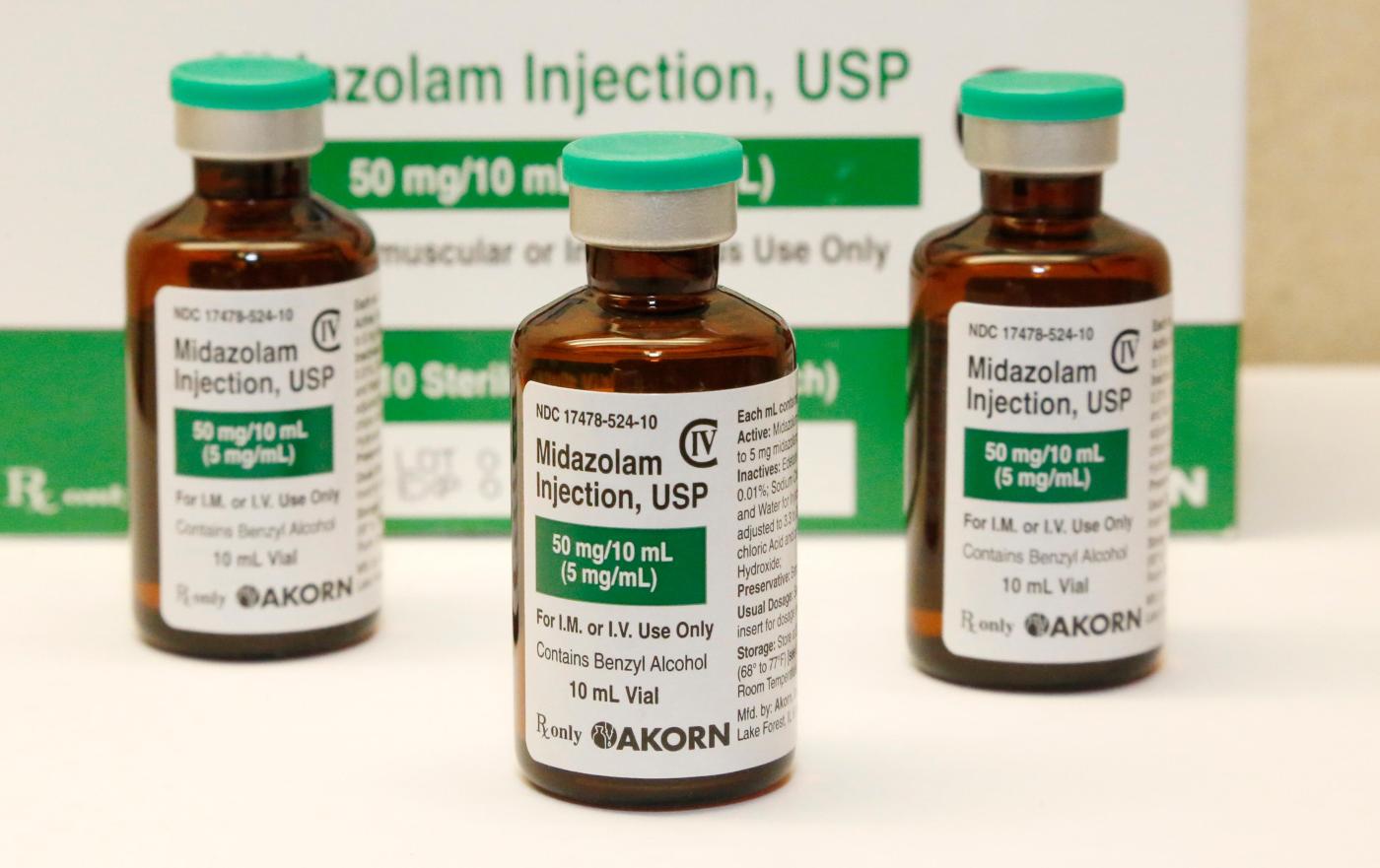
At trial, Arias’ attorney presented a twofold defense. He argued on the one hand that the shooting was self-defense, and said in court records another man had been seen with a gun at the party. The defense also attacked the official cause of death that Henriquez-Martinez died from a gunshot wound, arguing instead that it was medical negligence, based on a paramedic’s decision to inject Henriquez-Martinez with midazolam, a sedative commonly known as Versed, shortly after he’d been shot.
The paramedic justified this by stating that she was trying to “gain compliance” while attempting to insert an IV into Henriquez-Martinez’s arm, according to court records. The defense argued this amounted to “grossly improper” medical treatment that caused Henriquez-Martinez to succumb to what shouldn’t have been a fatal wound. While jury deliberations are closed to the public, there is evidence that jurors strongly considered this argument; shortly before reaching the verdict, the jury sent a note to Judge Scott Patton asking if “grossly improper medical treatment” had a specific legal definition.
Patton responded by telling jurors to interpret the term “in a common sense logical manner.” The jury returned its not guilty verdicts the following day, court records show.
The midazolam drug has been linked to other deaths, including several in-custody fatalities around the Bay Area. Most recently, last March, a veteran named Nathan Hoang died in police custody after a paramedic injected him with the drug and others strapped him to a gurney for an ambulance ride. Like many other fatalities involving the sedative, Hoang was believed to be under the influence of methamphetamine, a powerful stimulant, and had been arrested for allegedly wrestling with police during a tumultuous incident where he appeared to be hallucinating, according to court records.
Last year, an investigative report by the Associated Press, in collaboration with PBS Frontline and the Howard Centers for Investigative Journalism, highlighted 94 cases across the U.S. where a person died in police custody after medics administered a sedative. That is nearly 10 percent of the more than 1,000 deaths identified during the investigation of people subdued by police in ways that are not supposed to be fatal.
The report noted 16 such deaths in California, seven of which occurred in the Bay Area, all involving midazolam. The deaths were attributed to causes other than the sedative, and similar to the other cases across the U.S., some of them officially were attributed to “excited delirium,” a controversial diagnosis that has been widely abandoned by medical professionals.
In Arias’ case, eyewitnesses testified that he and Henriquez-Martinez had just come back from a trip to the store for alcohol and a cigar wrap with a third person when Arias inexplicably pulled out a pistol and shot Henriquez-Martinez.
Arias’ then-girlfriend testified at the hearing that she confronted Arias about the shooting hours later, before his arrest, and that he had a blank look and appeared to be “in shock.” She testified he said something about being “touched by the devil” or that “the devil made me do it.” Later, during police questioning, she said Arias told her that he believed the devil sent three people to hurt him and that Henriquez-Martinez was one of them, according to court records.
According to multiple witnesses, Arias — who was 19 at the time of the shooting — barely knew Henriquez-Martinez and met him through a mutual friend who was hosting the barbecue. He didn’t appear intoxicated, distressed, or even angry in the moments leading up to the shooting, the witnesses said.
The defense argued that Arias’ actions were not a “substantial” factor in Henriquez-Martinez’s death, and focused on the administration of midazolam in the ambulance. Arias’ lawery, Assistant Public Defender Palden Ukyab, wrote court filings calling it “an egregious deviation from the acceptable standard of care.”