By MEGAN JANETSKY and JULIA FRANKEL, Associated Press
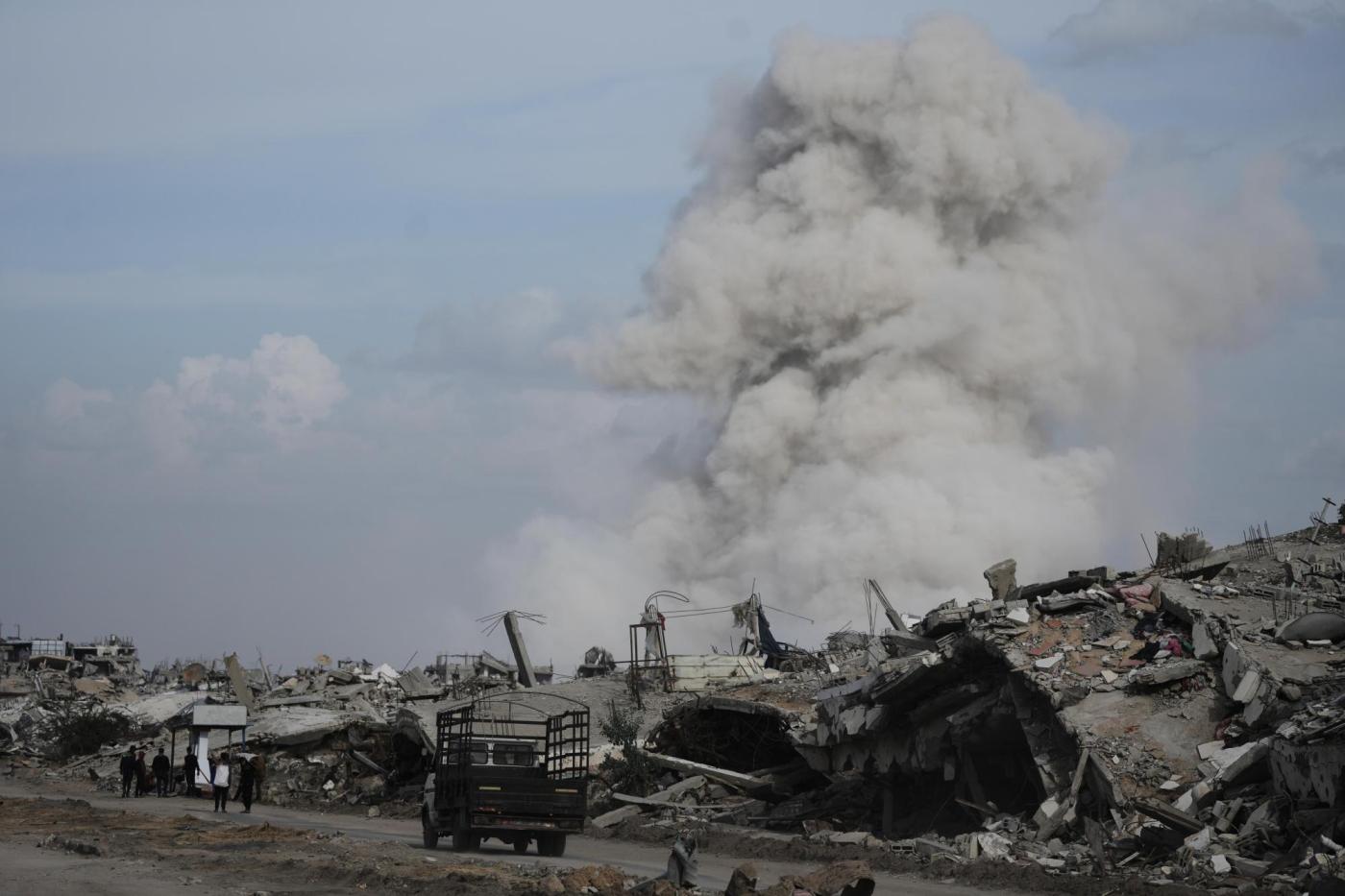
JERUSALEM (AP) — Hamas on Tuesday called for more international pressure on Israel before the group moves forward with the next phase of the ceasefire in Gaza, with a Hamas leader saying it wants Israel to open a key border crossing, cease deadly strikes and allow more aid into the strip devastated by the two-year war.
The demand came as Israel’s government says it is ready to move into the next and more complicated phase of U.S. President Donald Trump’s 20-point ceasefire agreement, while calling on Hamas to return the remains of the last Israeli hostage held in Gaza as envisioned in the deal.
Husam Badran, a member of Hamas’ political wing, called for the “full implementation of all the terms of the first phase” before moving forward, including an end to what he called the continuing demolition of Palestinian homes in the majority of the territory still controlled by Israel.
Israeli airstrikes and shootings in Gaza have killed at least 376 Palestinians since the ceasefire took hold on Oct. 10, according to Palestinian health officials.
A difficult, second phase
Badran said it was not possible to enter the second phase of the ceasefire unless the steps he demanded were taken — remarks that reflect a hardening of tone from Hamas.
However, the group has little leverage in ceasefire negotiations and could come under heavy pressure from regional powers like Qatar and Turkey to not hit the brakes on the fragile truce.
Israel has also accused Hamas of violating the ceasefire and says its recent strikes in Gaza are in retaliation for attacks against its soldiers, and that its troops have fired on Palestinians who approached the “Yellow Line” — a vague line between Israeli-controlled territory and the rest of Gaza.
It says those killed were suspected fighters who posed a threat to troops, but it appears at least some were civilians who ventured too close to the line, and those killed have included women and children.
The lack of aid
As a humanitarian crisis continues in Gaza, the United Nations and other aid organizations said that not nearly enough aid is entering the territory, parts of which have faced famine.
Under the ceasefire deal, the number of trucks of supplies was supposed to ramp up to at least 600 a day. For the past month, the U.N. has recorded an average of around 120 trucks of aid entering Gaza. The figure does not include commercial trucks, whose precise numbers are not known.
COGAT, the Israeli military body in charge of coordinating aid entry, has said 600-800 trucks are entering daily.
But the U.N. humanitarian agency OCHA said in its latest weekly report that many of the commercial goods in the market remain unaffordable to many Palestinians, and “dietary diversity remains poor, with essential protein sources still largely unavailable.”
The agency also said the entry of medical supplies has “not increased in any meaningful way” and some hospitals still face severe shortages of essential drugs and supplies.
Israel said on Wednesday it would begin to allow aid destined for Gaza through a crossing on the Jordan-Israel border.

A key border crossing
The ceasefire deal also calls for the Rafah crossing between Gaza and Egypt to be opened for traffic in both directions. Israel has said it is prepared to open the crossing for Palestinians to leave the territory, but not yet to enter.
The U.S.-led plan outlining the future for the devastated territory has gained momentum in recent weeks. The two sides and mediators are to enter negotiations soon over the terms of the next phases, which call for Hamas to be disarmed.
Israeli Prime Minister Benjamin Netanyahu said Sunday that Israel and Hamas are “very shortly expected to move into the second phase of the ceasefire,” after Hamas returns the remains of the last hostage. Hamas has said the destruction by Israeli strikes in Gaza has been an obstacle in their search for the remains.
Meanwhile, officials have said that an international body tasked with governing Gaza is expected to be announced by the end of the year.
Israel’s 2-year-long campaign in Gaza has killed more than 70,300 Palestinians, roughly half of them women and children, according to the territory’s Health Ministry, which does not distinguish between combatants and civilians in its count. The ministry, which operates under the Hamas-run government, is staffed by medical professionals and maintains detailed records viewed as generally reliable by the international community.
The campaign was triggered by the Hamas-led attack on southern Israel on Oct. 7, 2023, when fighters killed around 1,200 people and took 251 hostages. Almost all of the hostages or their remains have been returned in ceasefires or other deals.
Find more of AP’s Israel-Hamas coverage at https://apnews.com/hub/israel-hamas-war