
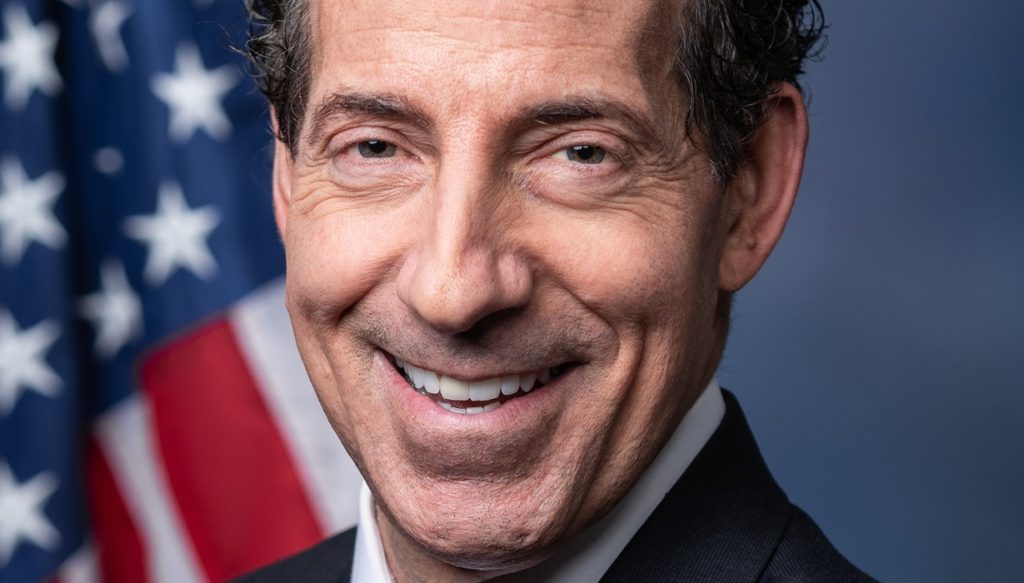


U.S. Representative Jamie Raskin (D-MD) doesn’t think there’s room for non-disclosure agreements (NDAs) that upend the transparency expected of elected officials in representative government. And the Maryland representative is asking Amazon, Google, Meta, and Oracle why local officials have been required to keep residents in the dark while negotiating deals for new artificial intelligence data centers.
“Why is your company requiring state and local officials to sign non-disclosure agreements (NDAs) preventing them from discussing data center projects with their own constituents?” Raskin wrote in letters to the four companies.
Raskin characterized the NDAs as “gag orders” — a rough term that accurately describes the effect when public officials are prohibited from sharing information with their constituents.
As a result, Raskin says, NDAs can prevent people from learning how a proposed data center will impact their lives and communities — finding out about water and electricity use, tax breaks granted and other contractual obligations only after a deal is done.
RM @RepRaskin launched an investigation into Amazon, Google, Meta and Oracle over their use of non-disclosure agreements (NDAs) to prevent local officials from discussing data center projects with constituents. https://t.co/3SnWd0w3V0
— House Judiciary Dems (@HouseJudiciary) September 30, 2026
The Wall Street Journal reported that Google, Meta, and Oracle did not immediately respond to Raskin’s query. Amazon said that it no longer uses NDAs with government partners for data center projects.
[NOTE: Raskin asked the companies to produce every NDA they have signed with a federal, state or local official since 2021 — and to provide projections for electricity and water use at the companies’ U.S. data centers.]
Noting that more than 1,000 new data centers are planned across 40 states, Raskin said residents require transparency if they are to retain a say in their futures. The congressman cited a highly controversial approval process in Boyce, Louisiana, where “residents learned about a proposed 300-acre, multibillion-dollar data center only after fences had gone up and ground clearing had begun.”
A study conducted in advance of that construction, which purportedly found that negligible environmental costs would be borne by residents, “could not be released for contractual reasons.”
[NOTE: At least five state senators signed NDAs concerning that project, according to the Gulf States Newsroom and Type Investigations.]
Announcing its decision early this year to end the data center NDA practice that is “common in the industry,” Microsoft explained what developers used NDAs for, while also assessing community transparency as more valuable than secretive protocol.
“Microsoft has sometimes used NDAs during early stages of datacenter development to help protect sensitive commercial information, address early security considerations, and ensure we can comply with local regulatory and permitting processes,” the company wrote. “It is a common industry practice to seek NDAs to protect early information about development proposals. However, we’ve made the decision that being transparent with the communities where we operate or seek to operate is paramount.”
Raskin has also sought legal restrictions that would make decisions like Microsoft’s compulsory, not voluntary, introducing the No Secrets for Data Centers Act with fellow Representatives Greg Landsman (D-OH) and Tom Barrett (R-MI).
The No Secrets bill would invalidate NDAs that prevent public officials from revealing information about data center projects being considered and prevent federal subsidies from going to companies that use the agreements.